LASER CENTRE · VICTORIA PIGMENT PRECISION™
Your pigmentation is not a diagnosis.
Sun spots, freckles, post-acne marks, melasma and deeper pigment can all look brown, but they should not all be treated the same way. Victoria Pigment Precision™ combines physician-led pigment assessment with the multi-wavelength Smart Picosecond medical laser to identify the likely pigment, choose the right strategy and protect the skin around it.
Pigment Mapping assessment SCR 900 · deductible from your treatment
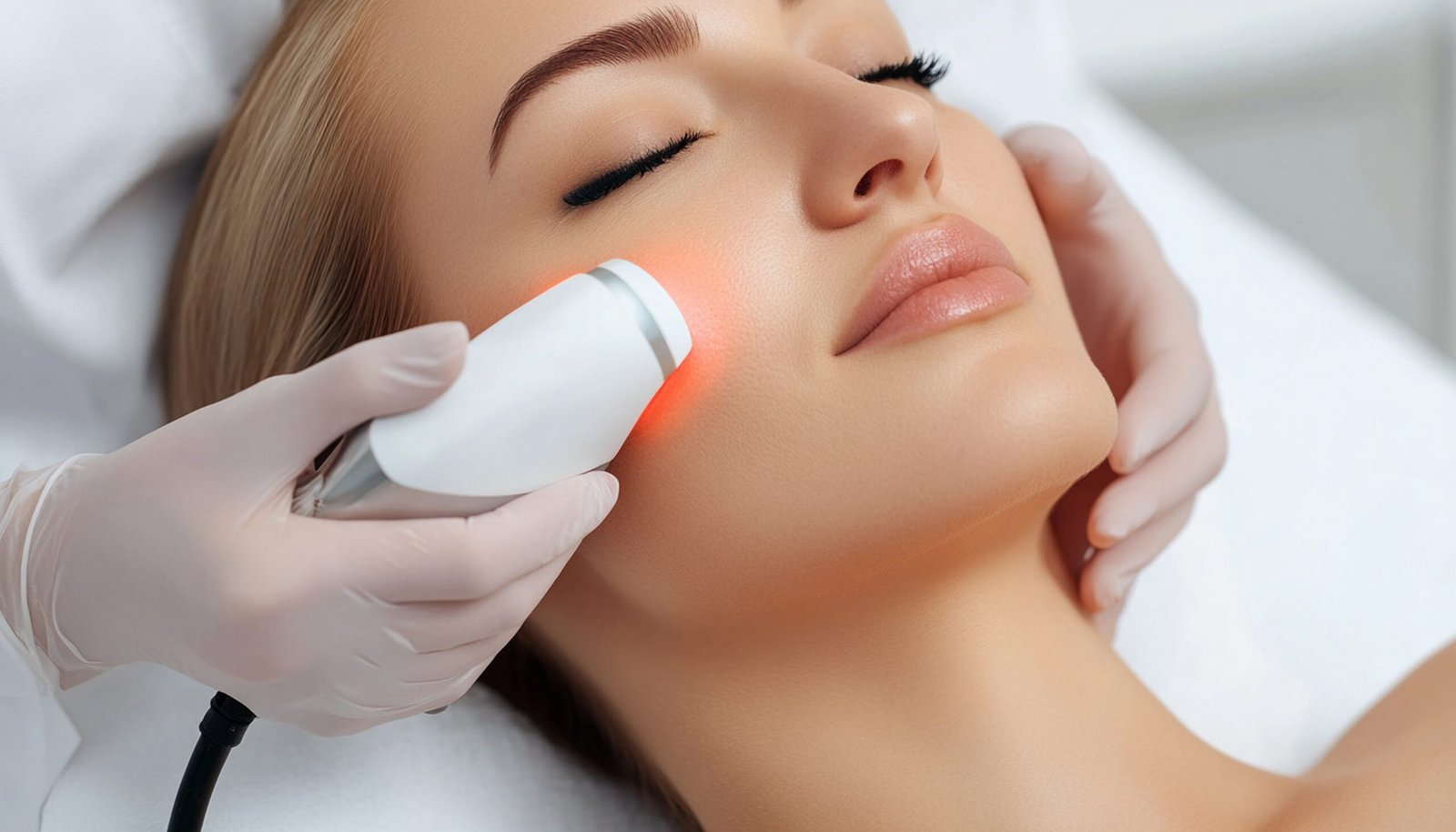
TECHNOLOGYSmart Picosecond
WAVELENGTHS532 · 755 · 1064 nm
SUPERVISIONDr. Eric Licea, MD
PLATFORM
4 wavelengths
Smart Picosecond multi-wavelength medical laser
METHOD
5 steps
Diagnose, map, target, protect, maintain
AREAS
Face +
Hands, décolletage and selected body areas
ASSESSMENT
SCR 900
Deductible from your treatment
YOUR PIGMENTATION IS NOT A DIAGNOSIS
At Victoria Aesthetics we do not begin with a laser setting. We begin by asking: what are we actually treating? Each type has its own pathway.
New, changing, irregular, bleeding, symptomatic or uncertain pigmented lesions are medically evaluated before any cosmetic laser treatment.
THE VICTORIA PIGMENT PRECISION™ METHOD
A five-stage clinical framework that moves beyond generic “dark spot removal” to a plan built around the pigment actually present in your skin.
SMART PICOSECOND · MULTI-WAVELENGTH STRATEGY
Ultra-short picosecond pulses with a strong photoacoustic effect break absorbed pigment into smaller particles that the body clears gradually. Results remain wavelength-, lesion- and skin-dependent. Choose a wavelength to see its role.
SUPERFICIAL / EPIDERMAL PIGMENT
532 nm
Strong melanin absorption makes 532 nm useful for selected superficial benign pigment such as freckles and sun spots. Because normal skin melanin also absorbs it, skin type and endpoint selection matter.
A wavelength is not selected simply because a spot is brown.
Illustration of relative depth only, not exact penetration.
WHAT WE TREAT
Sessions are often 1 to 3 or more for selected superficial lesions, and longer for mixed or deeper pigment. Recovery depends on the lesion, wavelength and endpoint.
MAY BE SUITABLE
SEPARATE PATHWAY
Melasma is chronic and recurrent. It is managed through its own control-and-maintenance programme, not as spot removal.
Victoria Melasma Control™NOT BLINDLY TREATED
DIAGNOSIS-LED PIGMENT CARE
Don't choose a laser because a spot looks brown. Choose a treatment because the pigment has been assessed.
MELANIN-RICH SKIN · TROPICAL UV · PERSONALISED LASER PLANNING
The challenge is to treat unwanted pigment while respecting the melanin naturally present in healthy skin. Post-inflammatory darkening and lightening remain recognised risks of pigment laser and cannot be reduced to zero.
Precision, not aggression. The goal is not the highest energy. It is the right selective treatment for the pigment and the skin around it.

THE SUN-EXPOSED ZONES
During assessment we can review several sun-exposed zones and decide whether treatment should be focal, regional or staged.
Sun spots, freckles and uneven pigment become more noticeable after years of UV.
Constantly exposed to sunlight, hands develop increasingly visible lentigines.
The upper chest is commonly exposed yet often overlooked in facial plans.
Discrete benign pigment elsewhere can be assessed individually.
PREMIUM MULTI-ZONE PLAN
A multi-zone pigment assessment and an individually selected Smart Picosecond strategy for suitable patients with visible pigment across several sun-exposed areas. Treatment may be staged according to how your skin responds.
At assessment
Ask about it (opens WhatsApp in a new tab)YOUR PIGMENTATION TREATMENT JOURNEY
Selected patients may need a test spot, staged treatment or pre-treatment skincare before the laser is used.
STEP 01
Pattern, colour, likely depth, distribution, UV history and previous treatments, with baseline photography.
STEP 02
Is Smart Picosecond appropriate? Focal, multi-spot or broader approach.
STEP 03
Skin prepared; a test spot or staging when the risk calls for it.
STEP 04
Wavelength and parameters chosen for the target and the surrounding skin.
STEP 05
Barrier care, photoprotection and follow-up decide further sessions.
HOW MANY SESSIONS WILL I NEED?
Laser targets existing visible pigment. It cannot remove future UV exposure, genetics, hormones, inflammation or ageing, so new pigment can appear over time.
AN HONEST EXPECTATION
RECOVERY & TROPICAL AFTERCARE
In Seychelles, daily broad-spectrum photoprotection is central to both recovery and long-term pigment control. Avoid deliberate tanning.
IMMEDIATELY
The area may whiten, redden, swell or darken briefly, with warmth or stinging.
FOLLOWING DAYS
Superficial spots may darken or form fine crusting before flaking. Do not pick or scrub.
FOLLOWING WEEKS
Change continues as skin recovers. Temporary PIH or lightening can occur, especially in darker skin.
REVIEW
We assess the response before deciding on any further session.
Contact the clinic for blistering, significant swelling, persistent pain, signs of infection or any reaction outside what was discussed with you.
TREATMENT PLANS
The final price depends on diagnosis, number and size of lesions, treatment area, and whether focal, multi-zone or combined treatment is needed.
START
Diagnosis, pattern and depth mapping, skin type and strategy.
SCR 900
FOCAL
One or a few diagnosed discrete spots, with aftercare.
At assessment
FEATURED
Multiple freckles, sun spots or broader facial pigment suitable for laser, with a progress review.
At assessment
STAGED
Staged treatment, progress tracking and coordinated medical skincare.
At assessment
PREMIUM
Face, hands and décolletage, staged to your skin's response.
At assessment
WHY VICTORIA AESTHETICS
It is deciding what the pigment is, whether it should be treated, how deep it sits, which wavelength fits and how to avoid complications. Physician-supervised by Dr. Eric Licea, MD.
532, 755 and 1064 nm pigment wavelengths on one medical platform.
Every lesion is assessed before it is treated.
Settings chosen for the pigment and the skin around it.
Baseline melanin and PIH risk built into the plan.
Selective treatment rather than maximum energy.
Medical aftercare, and another route when laser is not right.
QUESTIONS
Stop guessing what the dark spot is. The most important decision happens before the laser is switched on.
It can substantially lighten or clear selected benign pigmented lesions, including some freckles and sun spots. Results depend on the diagnosis, depth, skin type and treatment strategy.
There is no single best wavelength. 532 nm is strongly absorbed by superficial pigment, 755 nm has established pigment applications, and 1064 nm reaches deeper with lower absorption by surface melanin. The choice follows assessment.
It can be appropriate for darker skin, but no pigment laser is risk-free. Post-inflammatory darkening and lightening remain possible, so wavelength, energy, endpoint, sun exposure and aftercare all matter.
Laser targets existing visible pigment, but it cannot remove the drivers of future pigment. Sun exposure, genetics, hormones, inflammation and ageing can all lead to recurrence or new spots.
Sometimes, for a selected superficial lesion, but it should never be promised. Many lesions need 1 to 3 or more treatments, and deeper or mixed pigment can need a longer plan.
Some superficial spots temporarily darken or form fine crusting before fading. Post-inflammatory pigmentation is also a recognised complication, so your expected endpoint and recovery are explained beforehand.
Melasma is chronic and recurrent and needs a dedicated management strategy. Smart Picosecond may help selected patients, but melasma is never treated as simple spot removal.
No. A new, changing, irregular or uncertain pigmented lesion is medically assessed before any cosmetic laser treatment.
Carbon Laser Peel is mainly a low-downtime refresh for oiliness, congestion and clarity. Targeted Smart Picosecond treatment is chosen when the main goal is an identified pigment lesion.
Potentially, yes. Hands and décolletage are common sun-exposed zones. Whether they suit treatment, and whether areas are treated together or staged, is decided at assessment.
MEDICAL PIGMENT MAPPING · MAHÉ, SEYCHELLES
Victoria Aesthetic & Wellness Clinic · Bel Etang Building, Hermitage Road, Mont Fleuri, Mahé, Seychelles
PIGMENT MAPPING ASSESSMENT
SCR 900
INCLUDES
Medical disclaimer: General educational information only, not a substitute for individual medical assessment or diagnosis. Pigmented lesions are assessed before cosmetic treatment. Suitability, wavelength selection, response, number of sessions and recovery vary. No percentage of clearance, number of sessions or permanent pigment removal can be guaranteed; recurrence, post-inflammatory hyperpigmentation, hypopigmentation and other adverse effects are possible.
CONTACT US
Your wellness journey is important to us. We believe in open communication and partnership with our patients. Share your experiences, ask questions, and let us know how we can best support you. We're always here to listen and provide the information you need.
You can make an appointment right now, or fill out the form and you'll receive an answer as soon as possible.
CLINIC ADDRESS
Bel Etang Building, Hermitage Road,
Mont Fleuri, Mahé, Seychelles
PHONE
+248 2 511 268
Call us+248 2 511 268
Talk with us (opens in a new tab)seychellesaesthetics@gmail.com
Send an emailACCREDITATIONS & MEMBERSHIPS









VICTORIA AESTHETICS & WELLNESS CENTRE
International Standards. Island Luxury.
CLINIC HOURS
Monday–Friday: 8:30 AM – 4:30 PM
Saturday: 8:30 AM – 12:30 PM
General medical disclaimer: Educational content only — not medical advice, diagnosis, or a guarantee of individual outcomes. All treatments at Victoria Aesthetic & Wellness Clinic are offered under strict physician supervision, with individual assessment, informed consent, and documented follow-up.
© 2026 Victoria Aesthetics Wellness Centre. All rights reserved.