






Skip to content
Victoria Aesthetics Wellness Centre

VICTORIA AESTHETICS LASER CENTRE · ADVANCED SCAR TREATMENT IN SEYCHELLES

Advanced acne & scar revision in Seychelles.

Physician-led fractional laser protocols for acne scars, surgical scars and selected post-traumatic scars — planned around scar architecture, skin type, pigmentation risk and your recovery goals.

Featuring the FRAX-DUAL 360™ dual-wavelength fractional protocol, with subcision or combination treatment considered when clinically appropriate.

  • Physician-led care
  • Dual-wavelength fractional technology
  • Skin of colour treatment planning
  • Mahé, Seychelles

PROTOCOLFRAX-DUAL 360™

WAVELENGTHS1550 nm + 1927 nm

FIRST STEPScar classification, not a preset

AT A GLANCE

Personalised scar classification & treatment planning.

Scar tissue is not uniform. Acne scars, surgical scars and post-traumatic scars differ in depth, shape, colour, fibrosis and tethering — and different scar architectures respond to different treatment strategies.

That is why treatment here begins with scar classification rather than a generic laser setting. Energy, density, coverage and intensity are selected for the scar in front of us and for the skin it sits in.

Final treatment selection is determined during clinical assessment.

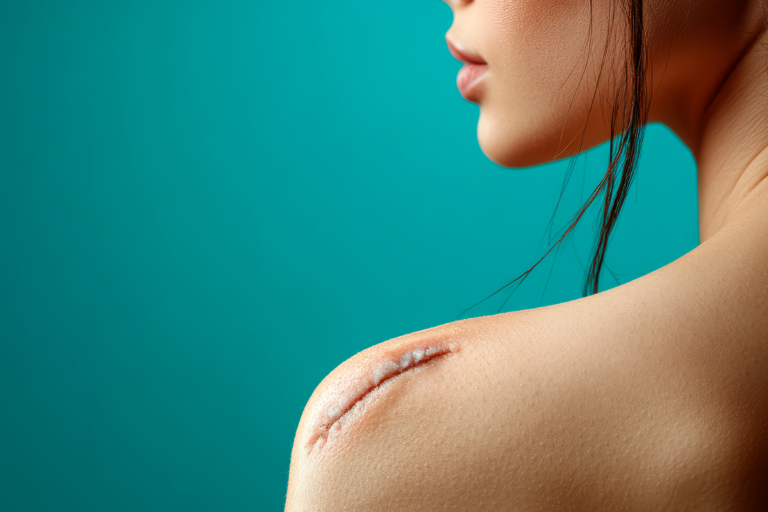
Close-up of scarred skin being assessed at the clinic
Status
Advanced fractional laser protocol under clinical supervision
Technology
Dual-wavelength non-ablative fractional laser — 1550 nm Er:Glass + 1927 nm Thulium
Primary action
Controlled fractional photothermal treatment and progressive dermal remodelling
Results
Improvement develops progressively; timing and degree vary by scar type, intensity and individual response
Location
Victoria Aesthetics, Mont Fleuri, Mahé, Seychelles

PROBLEMS WE TREAT

What type of scar do you have?

Different scars. Different architecture. Different treatment.

Select a scar pattern to see how it sits in the skin and which strategy is usually considered for it. The diagram is a simplified cross-section, drawn to explain the principle rather than to diagnose your own skin.

Simplified cross-section of skin showing the selected scar profile A broad, wave-like depression tethered to deeper tissue by fibrous bands.
Simplified cross-section · not to scale · illustrative only

ROLLING ACNE SCARS

Broad, wave-like depressions that may be tethered to deeper tissue. Where clinically appropriate, subcision may be considered to release fibrous bands before or as part of a staged resurfacing plan.

Architecture
Shallow and wide, with fibrous tethering beneath
Usually considered
Subcision to release tethering, staged with fractional resurfacing

Subcision may be part of the plan.

Deeply tethered, hypertrophic, keloidal, pigmented or complex scars may require a different or multimodal approach. Final treatment selection is determined during clinical assessment.

WHAT FRACTIONAL RESURFACING ACTUALLY DOES

Thousands of microscopic treatment zones. The skin between them left intact.

Fractional laser treatment creates controlled microscopic treatment zones within the skin while preserving the surrounding tissue. That controlled photothermal effect stimulates a healing response and progressive collagen remodelling, which may improve scar texture, pliability and visible depth over time.

How we plan it

TREATMENT & DIFFERENTIATION

The Victoria Aesthetics approach to scar revision.

FRAX-DUAL 360™

  • 01

    Diagnostic scar mapping

    We assess scar type, depth, tissue tethering, pigmentation, anatomical location and the surrounding skin before defining any treatment strategy.

  • 02

    Physician-calibrated parameters

    Energy, density, coverage and treatment intensity are selected for the individual scar and skin rather than taken from one standard preset.

  • 03

    Surgical synergy for tethered scars

    Where clinically appropriate, subcision may be incorporated into a staged or combination protocol to release fibrous tethering beneath depressed scars.

  • 04

    Skin of colour planning

    Darker phototypes require particular attention to inflammation, pigmentation history, recent sun exposure and post-treatment care.

  • 05

    Structured pre- & post-care

    Preparation, barrier support, photoprotection and follow-up are adapted to the treatment performed and to your pigmentation risk.

  • Treatment room at Victoria Aesthetics, Mont Fleuri
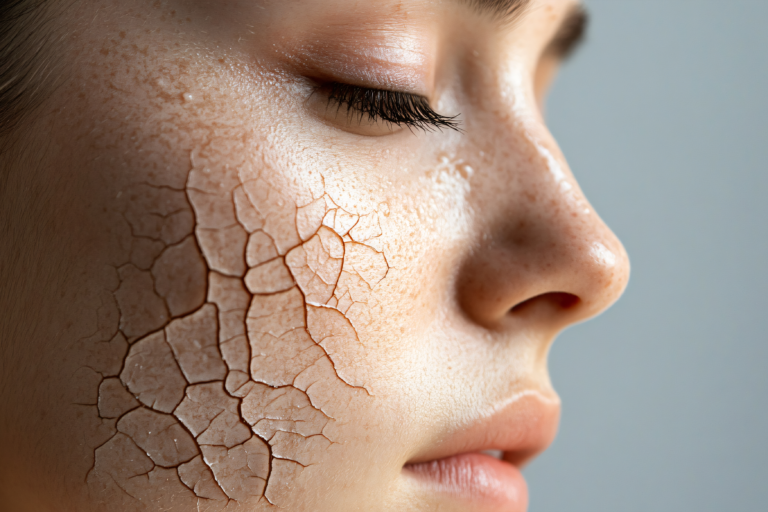
Close-up of facial skin texture

The medical advantage: scar architecture & combination treatment

A scar may have more than one component: surface irregularity, altered pigmentation, dermal collagen disorganisation and deeper fibrous tethering. Treating only the surface may therefore be insufficient for selected scars. The plan is built around the architecture of the scar and may combine modalities when appropriate.


Clinician marking treatment zones on a patient's face

The surgical advantage: subcision for tethered scars

For selected depressed rolling or tethered scars, fibrous bands beneath the skin contribute to the visible depression. Subcision is a minimally invasive technique used to release those bands. Where indicated it may be performed as part of a staged or combination plan alongside resurfacing, rather than assuming laser alone will address every component.

Laser handpiece being used during a facial treatment

Dual-wavelength precision

The 1550 nm and 1927 nm wavelengths target different tissue depths and treatment objectives. Their role within an individual protocol is selected according to scar characteristics, pigmentation concerns and skin type. Not every patient requires the same wavelength balance or intensity.

Patients of several different skin tones

SKIN OF COLOUR · PERSONALISED LASER PLANNING

Scar revision for melanin-rich skin.

Melanin-rich skin can be treated with fractional technologies in appropriately selected patients, but planning requires particular care. Darker phototypes may have a greater tendency toward post-inflammatory hyperpigmentation following excessive inflammation.

For that reason we assess skin type, pigmentation history, recent tropical sun exposure, scar characteristics and recovery requirements before selecting any treatment parameters.

  • Patient selection

    We first determine whether fractional resurfacing is appropriate for the scar, for the skin and for your current sun exposure.

  • Parameter calibration

    Density, energy and intensity are individually selected according to skin type, scar characteristics and the clinical endpoint.

  • Pigmentation risk management

    Strict photoprotection, barrier-supportive aftercare and, where clinically indicated, targeted pre-treatment skincare may form part of the plan.

“In melanin-rich skin, the objective is not to use the highest energy setting. It is to select an effective treatment strategy while carefully managing inflammation and pigmentation risk.”

Dr. Eric Licea, MD

PATIENT JOURNEY

Your 5-step scar treatment journey.

Assessment first

  1. STEP 01

    Consultation & diagnostic assessment

    We evaluate scar topography, scar type, tissue tethering, pigmentation tendency, recent sun exposure and relevant medical history. Standardised clinical photography may be established for baseline comparison.

  2. STEP 02

    Personalised treatment mapping

    Your strategy is selected according to scar architecture and skin characteristics. Where fractional laser is appropriate, wavelength balance, density, energy and intensity are individualised.

  3. STEP 03

    Preparation & comfort

    The area is cleansed and prepared. Topical anaesthesia and cooling may be used according to the area and intensity. Additional preparation may be recommended for selected patients.

  4. STEP 04

    Fractional laser & scar revision

    The personalised fractional protocol is performed systematically. For selected tethered scars, subcision or another complementary technique may be incorporated when clinically appropriate.

  5. STEP 05

    Recovery & follow-up

    Barrier-supportive care and strict photoprotection are provided according to treatment intensity. Written aftercare instructions and clinical follow-up form part of the recovery plan.

RESULTS & RECOVERY

What to expect after scar treatment.

Move through the recovery window to see what usually happens and when. Timing and visible reaction depend on treatment intensity and individual skin response.

The number of sessions and the degree of improvement vary according to scar type, depth, tissue tethering, skin type, treatment intensity, healing response and adherence to aftercare. No specific outcome can be guaranteed.

DAYS 1–3

Early recovery

Redness, warmth and mild localised swelling may occur. Sensation and visible reaction depend on treatment intensity and individual skin response.

HOW WE DOCUMENT RESULTS

Standardised photography, or nothing at all.

Consent first

  • Written consent

    No image appears anywhere without the patient's specific written consent for that use, which can be withdrawn.

  • Fixed conditions

    Same position, same lighting, same distance, same lens. Anything else compares photography rather than treatment.

  • Labelled honestly

    Scar type, treatments performed, number of sessions and the follow-up interval are stated with every pair.

  • No retouching

    Nothing is edited in a way that alters the treatment outcome, and individual results vary.

Your own baseline photography is established at the diagnostic assessment, so you can see your own progression rather than someone else's.

CANDIDACY & SAFETY

Is advanced scar revision right for you?

Assessed, not assumed

MAY BE CONSIDERED FOR

  • Acne scars — rolling, boxcar or selected ice-pick patterns
  • Mature surgical and incision scars
  • Selected post-traumatic scars
  • Stretch marks and striae
  • Significant textural irregularity

The appropriate technique depends on scar classification and skin characteristics.

ASSESSMENT REQUIRED · MAY BE POSTPONED, MODIFIED OR AVOIDED

  • Active skin infection or open wounds
  • Active inflammatory acne in the treatment area
  • Recent significant tanning or sun exposure
  • Pregnancy
  • Impaired healing risk or certain medications
  • A history suggesting abnormal scarring

Contraindications are not limited to this summary. Final candidacy and treatment selection are determined during clinical assessment.

Not sure which scar treatment is right for you?

Book a diagnostic scar assessment (opens in a new tab)

MONT FLEURI, MAHÉ

Treat the scar you actually have, not the one a machine preset assumes.

See the treatment investment

TREATMENT INVESTMENT

Advanced scar revision.

Starting prices

Your treatment plan depends on scar type, anatomical area, depth, tethering and the modalities required. These are current starting prices.

  • TARGETED SCAR CORRECTION

    From SCR 4,500per session

    A selected localised scar or a small treatment zone, treated with the personalised fractional protocol.

    Best for: one defined scar or a small area, subject to clinical assessment.

    Book a scar assessment (opens in a new tab)
  • MOST REQUESTED

    FULL FACE SCAR REVISION

    SCR 8,500per session

    Full-face fractional scar treatment, topical anaesthesia where appropriate, cooling support, post-treatment recovery care and barrier-supportive aftercare.

    3-session structural plan: SCR 21,675 — save 15%.

    Book a scar assessment (opens in a new tab)
  • EXTENDED AREA RESURFACING

    SCR 12,000per session

    Selected larger treatment areas, such as extensive facial and neck involvement or larger body scar zones.

    Best for: larger surface areas. Final suitability and price depend on area and treatment complexity.

    Book a scar assessment (opens in a new tab)

Prices and inclusions are subject to clinical assessment. Subcision or other complementary procedures, when indicated, may be priced separately. Flexible in-clinic payment terms may be available.

Dr. Eric Licea, Medical Director at Victoria Aesthetics

MEDICAL AUTHORITY

Medical precision. Personalised scar treatment.

Dr. Eric Licea, MD, MSc

Medical Director — Victoria Aesthetics

Dr. Licea brings extensive clinical experience in medical aesthetics, laser-based procedures and surgical techniques. That combined background allows scar treatment to be approached not simply as surface resurfacing, but according to scar architecture, tissue tethering and the potential need for combination treatment.

Member of the Spanish Society of Surgical & Medical Laser

  • Scar classification

    Treatment begins by identifying scar architecture rather than applying one generic protocol.

  • Fractional remodelling

    Parameters are adapted to the scar and to individual skin characteristics.

  • Subcision when indicated

    Selected tethered scars may benefit from mechanical release as part of a combination strategy.

  • Skin of colour planning

    Particular attention to pigmentation risk, inflammation and tropical sun exposure.

What patients say.

What we hear most is not about the machine. It is about finally being told which scars they actually have.

  • “The assessment was the part that changed things. I was told which scars were tethered and which were not, and why that mattered.”

  • “I was told exactly what the recovery would look like on my skin tone, day by day. Nothing surprised me.”

  • “Improvement came gradually over months rather than overnight, which is what I had been told to expect.”

  • “Two different techniques in one plan, staged over months. No one had explained that to me before.”

QUESTIONS

Frequently asked questions.

Does fractional laser scar treatment hurt?

Discomfort varies according to treatment area and intensity. Topical anaesthesia and cooling may be used to improve comfort. Most patients experience temporary heat, prickling or stinging rather than sharp pain, but individual sensitivity varies.

Can fractional laser be used on darker skin tones?

Potentially, yes — but patient selection and parameter selection are particularly important. Melanin-rich skin may have a greater tendency toward post-inflammatory pigmentation following excessive inflammation. We therefore assess skin type, pigmentation history, recent sun exposure and scar characteristics before deciding whether fractional resurfacing is appropriate. In some patients, another technology or a staged approach may be preferable.

What is subcision and when is it used for acne scars?

Subcision is a minimally invasive technique used to release fibrous bands beneath selected depressed or tethered scars, particularly some rolling acne scars. It is not required for every scar. When indicated, it may form part of a staged or combination treatment plan with fractional resurfacing or other modalities.

How much downtime should I plan for after laser scar treatment?

Downtime depends on the treatment intensity, the area and individual skin response. Several days of visible redness, dryness, bronzing or fine flaking may occur after a more intensive fractional treatment. Your expected recovery window and return to makeup, exercise and sun exposure are discussed before treatment.

How many acne scar treatment sessions will I need?

There is no single number for every patient. Scar type, depth, tethering, skin type and treatment strategy all influence the number of sessions. Some patients require a combination of techniques rather than repeated laser alone.

Can ice-pick, boxcar and rolling acne scars all be treated the same way?

No. These scars have different architectures. Rolling scars may be tethered and can require subcision; boxcar scars may respond to resurfacing depending on depth; narrow ice-pick scars may require a focal or combination approach. Your treatment plan is based on the scar types actually present.

Can surgical scars be treated with fractional laser?

Selected mature surgical scars may be suitable for fractional treatment to improve texture, pliability or visible irregularity. Timing, scar maturity, colour, thickness and healing history are assessed before treatment is recommended.

Confidential · physician-led · the consultation fee is deductible from your treatment.

PERSONALISED ACNE & SCAR TREATMENT IN MAHÉ, SEYCHELLES

Treat the scar you actually have.

Your private consultation is designed to classify your scar pattern, assess tissue tethering, pigmentation risk and skin characteristics, and determine whether fractional laser, subcision or a combination strategy is appropriate for you.

Clinical assessment first. No one-size-fits-all laser settings, and a clear treatment and recovery plan before anything is scheduled.

The consultation carries a fee of SCR 900, which is deductible from your treatment.

NOT READY TO BOOK?

Download the Seychelles laser scar aftercare guide.

A physician-guided introduction to skin-barrier care, photoprotection and recovery planning after professional fractional laser scar treatment in a tropical climate.

We send rarely and you can unsubscribe at any time.

Calm portrait of healthy skin in natural light
Which scars concern you most?

Your scar plan starts with a classification, not a machine setting.

Book the private scar assessment to have your scar pattern classified and your options explained, or take the online assessment first if you would rather start from home.

Book your private scar assessment (SCR 900)

Confidential. Physician-led. Fully deductible from your treatment plan.

Take the Free Wellness Assessment Quiz

Take our personalized assessment to find the perfect protocol for your goals.

FREE WELLNESS ASSESSMENT

Step 1 of 4

Free Wellness Assessment

Four short questions help our team understand where you are today and which of our clinical programs fits your goals. Nothing here is a diagnosis — a physician reviews every assessment before recommending anything.

Which goal matters most to you right now? (Required)
How long has this been a concern? (Required)
How would you prefer to be seen? (Required)

Where should we send your assessment?

A member of our clinical team will review your answers and contact you with the most appropriate next step.

Your Information

Thank you.

Our clinical team will review your assessment and contact you with the most appropriate next step.

Book a Consultation (opens in a new tab)
Privacy and Cookies

This website uses cookies so that we can provide you with the best user experience possible. Cookie information is stored in your browser and performs functions such as recognising you when you return to our website and helping our team to understand which sections of the website you find most interesting and useful.

More information in Cookies polity